
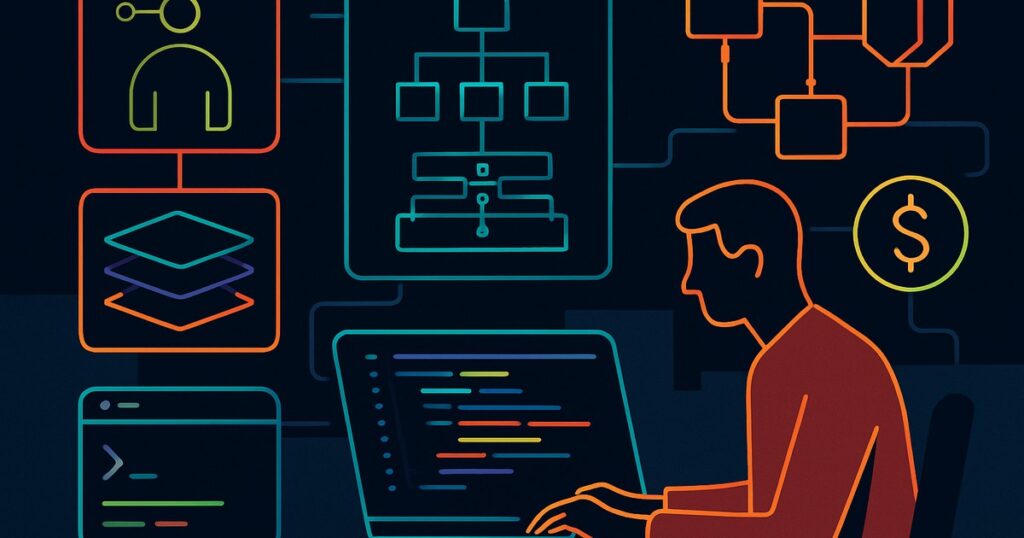
The landscape of DevOps in 2026 is undergoing a transformative phase, driven by six pivotal structural shifts that are reshaping how development and operations teams collaborate and innovate. These shifts, identified by multiple industry reports published this week, include the integration of agentic AI across the Software Development Life Cycle (SDLC), the rise of semantic layers and ontologies granting AI real business context, the evolution of internal developer platforms into sophisticated AI-ready environments, a focus on software supply-chain security beyond traditional container vulnerability scanning, OpenTelemetry-based observability becoming the new standard, and FinOps advancing from a monthly review ritual to a per-deploy decision-making process. This article explores these trends in detail, examining their implications for the future of DevOps and how they are setting the stage for an era of increased efficiency, security, and innovation.
Context
The DevOps movement, which began as a cultural and professional movement focusing on collaboration and communication between software developers and IT operations, has been evolving rapidly over the past decade. Initially driven by the need to improve the velocity of software delivery, the focus has gradually shifted towards enhancing automation, reliability, and security across the software delivery pipeline. The adoption of microservices architectures and containerization sparked a rethinking of infrastructure management, leading to the widespread adoption of continuous integration and continuous delivery (CI/CD) pipelines.
In recent years, the integration of artificial intelligence (AI) and machine learning (ML) into DevOps processes has accelerated, enabling teams to automate complex tasks and make data-driven decisions more effectively. Reports published this week highlight that the pace of change is only increasing, with AI technologies becoming deeply embedded within the SDLC, enhancing everything from code quality to deployment strategies. As businesses continue to demand more from their IT departments, the need for more sophisticated tools and processes has never been greater.
This week’s reports underscore the importance of adapting to these emerging trends. As global competition intensifies and digital transformation becomes a priority, organizations are under pressure to innovate rapidly while maintaining high standards of security and financial accountability. The six shifts identified reflect these pressures, offering a roadmap for DevOps teams seeking to stay ahead in an increasingly complex technological landscape.
What Happened
The first major shift involves the embedding of agentic AI across the SDLC. This trend sees AI not only performing well-defined tasks but also making autonomous decisions that can affect the entire development process. According to the reports, this integration allows for more intelligent automation, reducing the cognitive load on developers and enabling them to focus on more strategic tasks. This embedding of AI is seen as crucial to achieving faster release cycles and higher quality software.
The second shift is the development of semantic layers and ontologies. These frameworks provide AI agents with real business context, allowing them to understand and act upon the nuances of specific business environments. This development is essential as organizations increasingly rely on AI to drive business-critical decisions. By embedding these semantic layers, AI systems become more effective at supporting complex decision-making processes, aligning technical execution with business objectives.
Another significant transformation is the evolution of internal developer platforms. Originally focused on CI/CD, these platforms are now expanding to become AI-ready environments. This evolution is driven by the need for platforms that can support the full spectrum of AI activities—from data collection and preparation to model training and deployment. Companies are investing in infrastructure that not only automates routine tasks but also enhances the ability to experiment and iterate quickly, integrating AI capabilities directly into the development pipeline.
Why It Matters
The implications of these shifts are profound for the DevOps community. The integration of agentic AI across the SDLC means that developers can offload routine tasks, increasing their productivity and allowing them to focus on more creative and strategic work. This shift not only accelerates development cycles but also improves software quality by reducing human error. The rise of semantic layers ensures that AI systems can operate with a deeper understanding of business processes, leading to more accurate and impactful outcomes.
The transition of internal developer platforms into AI-ready environments marks a significant advancement in how businesses approach software development. By creating platforms that are inherently supportive of AI initiatives, organizations can streamline their workflows and foster a culture of innovation. This shift is particularly important as the demand for AI-driven applications grows, requiring businesses to quickly adapt to new AI technologies and methodologies.
The focus on software supply-chain security and the adoption of OpenTelemetry-based observability reflect a broader industry trend towards enhancing software security and reliability. As cyber threats continue to evolve, traditional security measures like container vulnerability scanning are no longer sufficient. By shifting the focus to the entire software supply chain and adopting comprehensive observability practices, organizations can better detect and respond to potential threats, ensuring the integrity and security of their software products.
How We Approached This
In crafting this article, we at DevOps Daily drew on a range of sources, including the latest industry reports and insights from leading experts in the field. Our editorial team prioritized data-driven analysis and firsthand insights from those on the front lines of DevOps innovation. We chose to emphasize the transformative nature of these shifts and their potential to redefine the future landscape of DevOps.
Our focus was on the tangible impacts of these changes, avoiding speculative commentary in favor of concrete examples and expert-backed analysis. We aimed to provide our readers with a comprehensive understanding of how these trends are shaping the industry and what they mean for the future of DevOps. By highlighting these key shifts, we hope to equip our readers with the knowledge they need to navigate this evolving landscape effectively.
Frequently Asked Questions
What is agentic AI and how does it differ from traditional AI?
Agentic AI refers to AI systems capable of autonomous decision-making within defined parameters, going beyond executing pre-defined tasks. Unlike traditional AI, which relies heavily on human input for decision-making, agentic AI operates with a level of independence, dynamically responding to changing conditions in real-time. This capability enhances operational efficiency and reduces the need for constant human oversight, making it particularly valuable in fast-paced DevOps environments.
How do semantic layers improve AI decision-making?
Semantic layers provide AI systems with structured knowledge that mimics human understanding of business contexts. By embedding ontologies, these layers enable AI to interpret data more effectively, aligning its actions with business goals. This understanding allows AI to make more informed decisions, improving its ability to contribute to business-critical processes. Semantic layers thus bridge the gap between raw data and actionable insights, enhancing the strategic value of AI in DevOps.
Why is FinOps becoming integral to per-deploy decision-making?
FinOps, or Financial Operations, is evolving to support real-time financial decision-making at the deployment level. This shift is driven by the need for businesses to optimize resource usage and control costs more precisely in cloud environments. By integrating FinOps into DevOps processes, organizations can make cost-effective decisions with each deployment, ensuring financial accountability and maximizing return on investment. This integration reflects a broader trend towards more agile and responsive financial management in IT.
As we look ahead, these six shifts represent more than just technological advancements; they are a reimagining of the DevOps paradigm itself. DevOps teams that adapt to these changes will likely lead the charge in innovation, harnessing the power of AI, enhancing security, and optimizing financial performance. As agentic AI and semantic layers redefine decision-making and internal platforms evolve to become more robust, the future of DevOps promises to be one of unprecedented agility and efficiency. Embracing these shifts wholeheartedly will be critical for any organization seeking to thrive in the digital age.